
Articles
The Role of Music Education in the Age of Digital Technologies
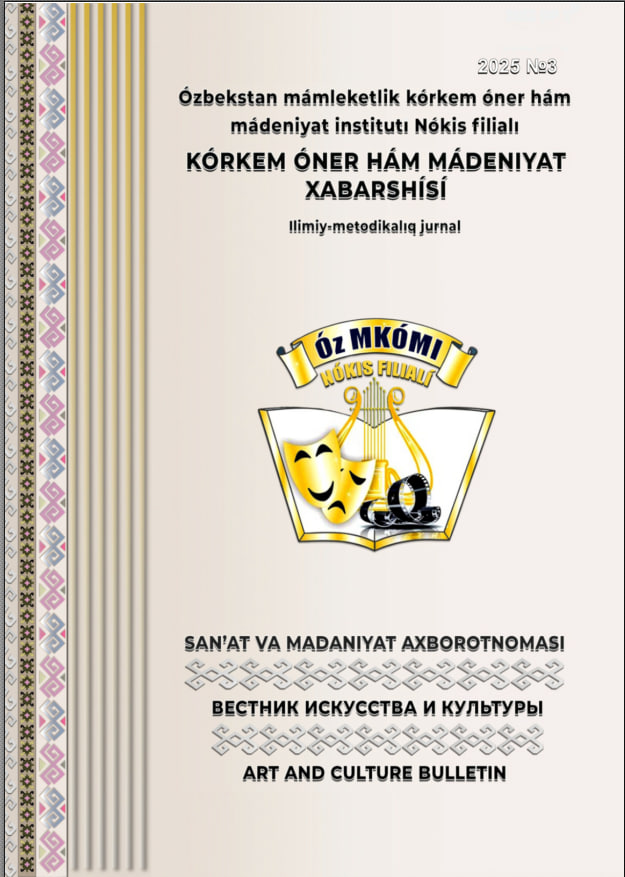
How to Cite
The Role of Music Education in the Age of Digital Technologies. (2025). ART AND CULTURE BULLETIN, 3, 40-42. https://doi.org/10.66900/dksjt137
Keywords:
technology
,
communication
,
music
,
emotional intelligence
,
Koday method
,
4K skills
,
critical thinking
,
creativity
Abstract
The article explores the place of music education in today’s fast-changing digital world. It
shows how music can help students develop key 21st-century skills like creativity, critical thinking,
communication, and collaboration. At the same time, it highlights how music supports emotional growth and
cultural understanding. While digital tools are becoming part of music learning, the heart of music education
remains deeply human — offering connection, expression, and meaning.
References
- 1. Estelle R. Jorgensen. Transforming Music Education. Indiana University Press. Bloomington. 2003. p. 23
- 2. Zoltan Koday. Selected Writings of Zoltan Koday. Boosey & Hawkes. London . 1974. p. 120
- 3. Carl Orff & Gunild Keetman. Elementaria: First Acquaintance with Orff-Schulwerk. Schott Music.
- Mainz. 1978. p. 65
- 4. Émile Jaques-Dalcroze. Rhythm, Music and Education. Dalcroze Society. London. 1921. p. 89).
- 5. Shinichi Suzuki. Nurtured by Love. Summy-Birchard. Princeton. 1983. p. 54
- 6. Lucy Greent. Music, Informal Learning and the School. Ashgate Publishing. Aldershot. 2008. p. 92
- 7. Andreas Schleicher. World Class: How to Build a 21st-Century School System. OECD Publishing. Paris.
- 2018. p. 74.